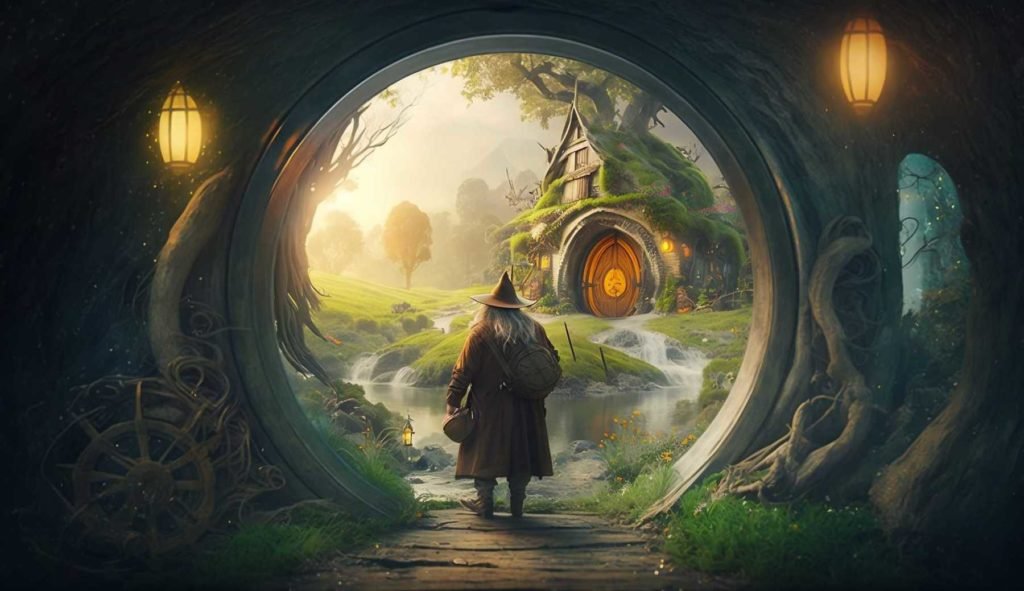
Ever felt a tug towards the Shire, a yearning for plump vegetables, a cozy burrow, and a name that just fits? While countless online tools promise to generate your hobbit name with a single click, there's a unique satisfaction in crafting one yourself. It's about more than just a random combination of syllables; it's about imbuing your name with the very essence of Middle-earth's most endearing folk. This guide will walk you through the delightful art of manually creating your own Hobbit name, drawing from the linguistic and cultural nuances that make these names so distinctively charming.
At a Glance: Crafting Your Hobbit Name
- Embrace Simplicity: Hobbit names are often unassuming, reflecting their down-to-earth nature.
- Look to Nature and Home: Many surnames derive from geographical features, plants, or domestic elements.
- Understand Linguistic Roots: Tolkien drew heavily from Old English, Germanic, and Norse for inspiration.
- Balance First and Last Names: Aim for a harmonious blend of common and slightly more unique sounds.
- Say It Aloud: The best Hobbit names roll off the tongue and feel natural to pronounce.
- Focus on Personality: Let your name reflect the traits of the hobbit you envision yourself to be.
Why Go Manual? The Heart of a Hand-Crafted Name
In a world filled with instant gratification, the idea of sitting down and thoughtfully constructing a name might seem quaint. But for a Hobbit name, it's particularly fitting. The manual approach allows you to weave in personal meaning, to carefully select sounds and structures that resonate with your imagined Hobbit persona. It’s akin to tending your own garden rather than buying produce from a market – a deeper connection to the roots, if you will.
It lets you explore the subtle echoes of history, the whispers of the Shire, and the quiet dignity of a name that feels truly yours. This isn't just about getting a name; it's about connecting with the spirit of Tolkien's world in a more intimate way.
Unearthing the Roots of Hobbit Names: A Linguistic Journey
To create a believable Hobbit name, you first need to understand where they come from. J.R.R. Tolkien, a master philologist, meticulously crafted the languages of Middle-earth, and Hobbit names are no exception. While some names, like Bilbo and Frodo, might seem straightforward, many have deeper linguistic connections, primarily to Old English (Anglo-Saxon), but also influences from Old Norse and other Germanic languages.
Think of how names like Baggins, Took, or Brandybuck sound. They have a certain antiquity, a solid, earthy feel that suggests long lineage and connection to the land. They avoid the overly grand or fantastical, opting instead for a comfortable, familiar ring. This "everyday folk" feel is central to their charm.
The 'Everyday Folk' Feel: Simplicity and Warmth
Hobbit names are rarely complex or ostentatious. They are typically short, often monosyllabic or disyllabic, and easy to pronounce. This simplicity reflects the uncomplicated, good-natured disposition of Hobbits themselves. They don't seek glory or grand adventures; they seek comfort, good food, and good company. Their names mirror this down-to-earth existence.
Consider Samwise Gamgee. "Samwise" evokes 'half-wise' or 'simple-wise,' a perfect fit for his loyal, unpretentious nature. "Gamgee" sounds like something from a cozy household, perhaps even related to 'cotton wool' or 'flannel' in archaic English. These aren't accidental choices; they're woven into the very fabric of the characters.
Echoes of the Earth: Nature and Landscape
Many Hobbit surnames are derived directly from natural features, places, or even plants. This highlights their profound connection to the land, their love for gardening, and their preference for quiet, rural living. Names like Baggins (suggesting a 'bag-end' or cul-de-sac), Took (perhaps from 'tuck' or 'brook'), Cotton, Burrowes, Grubb, Gardner, Greenhand, and Whitfoot all evoke images of the Shire's rolling hills, fertile fields, and cozy homes.
This tendency to name themselves after their surroundings or humble occupations is a key identifier of Hobbit culture. It roots them firmly in their environment and suggests a long history tied to specific locales.
Family Lines: Patronymics and Matronymics (Subtly)
While not as overtly structured as, say, Norse patronymics (e.g., Erikson), Hobbit names often imply lineage through their enduring surnames. Families like the Tooks, Brandybucks, and Bagginses are renowned throughout the Shire, and their names carry weight and history. Sometimes, a first name might even hint at an ancestral figure, although this is less common than in other cultures. The emphasis is on the surname carrying the family legacy.
Mastering the Hobbit Name Formula: Core Components
Now that we've explored the historical and cultural backdrop, let's break down the practical elements of constructing a Hobbit name. You'll typically be looking at a first name and a surname, sometimes with a middle name or a distinctive nickname.
First Names: Often Short, Sweet, and Familiar
Hobbit first names tend to be straightforward, often featuring softer sounds and common vowel combinations. They feel traditional, almost Old English in origin, but remain accessible and friendly.
Common Characteristics:
- Length: Usually one or two syllables.
- Sounds: Often contain 'b', 'd', 'f', 'g', 'h', 'l', 'm', 'n', 'p', 'r', 's', 't', 'w' sounds. Softer consonants are favored.
- Vowels: A good mix of short and long vowels (
a,e,i,o,u), often withoo,ee,ie,aydiphthongs. - Endings: Often end in
o,a,y,er,in,on.
Examples from Tolkien: - Male: Bilbo, Frodo, Samwise, Pippin, Meriadoc, Bungo, Largo, Dudo, Falco, Posco, Rorimac, Everard, Hamfast.
- Female: Belladonna, Esmeralda, Lalia, Lily, Primula, Ruby, Daisy, Rose, Lobelia (though she was a bit gruff!).
- Notice: Many female names borrow from flower names, adding to their gentle, natural appeal.
Building Blocks for First Names:
Think of combining simple sounds. - Starts: Bil-, Fro-, Sam-, Pip-, Mer-, Bun-, Lar-, Dod-, Nor-, Wil-, Bel-, Ros-, May-
- Middles/Ends: -bo, -do, -wise, -pin, -adoc, -go, -go, -dy, -ric, -bert, -ard, -mar, -belle, -inda, -alie, -anne, -ola, -ing.
Combine them and see what sounds good: Norburt, Willard, Marigold, Dotty.
Surnames: The Mark of Lineage and Locale
Hobbit surnames are perhaps the most distinctive element, instantly rooting a character in the Shire. They typically reflect their home, occupation, or a physical characteristic.
Key Themes and Inspirations:
- Occupational: Names reflecting common Hobbit pursuits.
- Gamgee (possibly related to cotton/flannel, implying textiles or domestic craft).
- Gardner (self-explanatory, a common and respected profession).
- Took (possibly from 'tuck', a weaver's term or related to a small valley).
- Geographical/Natural: Names taken from features of the landscape.
- Baggins (Bag End).
- Brandybuck (Brandywine River, Buckland).
- Burrowes, Hill, Banks, Brook, Dale, Fields, Wood, Greenleaf, Underhill.
- Thistlewick, Mossbottom, Heatherton.
- Descriptive: Names hinting at a characteristic, often physical.
- Whitfoot (light-footed or fair-skinned feet).
- Proudfoot (a sturdy, perhaps stubborn, bearing).
- Goodbody, Longbottom.
Common Suffixes for Surnames:
These are crucial for giving a surname that authentic Hobbit feel. -foot(Proudfoot, Whitfoot)-wick(Thistlewick, Butterwick)-bank(Riverbank, Hillbank)-dale(Harrowdale, Greendale)-borough/-burgh(Tumbleborough, Appleburgh)-bottom(Longbottom, Mossbottom)-well(Brightwell, Shadewell)-wood(Hazelwood, Oakwood)-hill(Underhill, Overhill)-low(Willowlow, Hollowlow –lowmeaning hill)-ham(Smallham, Oldham –hammeaning settlement)-ton(Brambleton, Littleton –tonmeaning town/settlement)
Examples of Constructed Surnames:- Willowfoot (from a willow tree by a river)
- Stonebank (living by a stony river bank)
- Brambleton (from a bramble patch near a small town)
- Hazelwick (a hazel copse near a dwelling)
- Brooklow (a small hill by a brook)
- Appleborough (a settlement known for apples)
Your Step-by-Step Guide to Crafting a Unique Hobbit Name
Ready to roll up your sleeves? Here's how to hand-craft a name that sounds like it came straight from the census books of Michel Delving.
Step 1: Choose Your Vibe (First Name Foundation)
Before you pick syllables, think about the hobbit you're naming. Are they:
- Sturdy and traditional? (Like a Gamgee or a Baggins)
- Merry and adventurous? (Like a Took or a Brandybuck)
- Quiet and scholarly?
- A keen gardener?
- A lover of fine food?
This 'vibe' will guide your choices. A hobbit named 'Grimshaw' might feel a bit out of place if they're meant to be constantly cheerful.
Brainstorming Sounds:
Start by listing sounds you like. Write down a few opening sounds: B, F, P, M, R, S, T, W, G. Then, some common vowel combinations: a, e, i, o, u, oo, ee, ie, ay. Finally, common endings: -o, -er, -in, -y, -ie. - Mini-Exercise: Try combining these: Ferry, Gillo, Pippin, Merro, Wimbel, Rosamund. Don't censor yourself; just get ideas down.
Step 2: Build Your First Name (Combine & Refine)
Now, let's turn those sounds into a proper first name.
- Start with a Root: Pick a sound or a small part of an existing name you like. For instance, if you like the feel of "Merry," you could start with "Mer-."
- Add a Suffix/Ending: Attach one of the common Hobbit-esque endings.
Mer+iadoc= MeriadocRos+y= RosyPip+pin= PippinFer+dinand= Ferdinand (a more formal, but still existing Hobbit name)
- Check the Flow: Say the name aloud several times. Does it feel clunky? Is it too long? Does it sound distinctly non-Hobbit? Aim for something that feels warm and familiar, even if it's new.
- Consider Gender (Optional): Many Tolkien-inspired female names lean towards flowers or precious stones (Daisy, Lily, Ruby, Pearl). Male names tend to be a bit more straightforward (Bilbo, Frodo). You can also aim for gender-neutral.
- Self-correction: Avoid names that sound too modern or highly unusual. "Blade" or "Skywalker" won't fit the Shire!
Step 3: Discover Your Lineage (Surname Inspiration)
This is where your Hobbit truly gets rooted. Think about:
- Their Home: Do they live near a brook, a hill, a wood, a ford, a bridge?
- Their Personality/Family Trait: Are they particularly good gardeners (Greenhand), swift of foot (Whitfoot), or perhaps a bit proud (Proudfoot)?
- Their Occupation (or family's traditional one): Are they a farmer, a baker, a miller, a brewer?
- A Local Plant/Animal: A prominent tree, a common flower, a small animal found in their area (e.g., Badger).
Brainstorming Core Words:
List some evocative words related to the above themes. - Nature: Brook, Hill, Wood, Green, Moss, Bramble, Thistle, Apple, Willow, Stone, Clay, Meadow, Ford, Orchard.
- Home: Burrow, Cottage, Hearth, Lane, Home, Croft.
- Occupation/Trait: Miller, Baker, Porter, Good, Stout, Sweet, True, Proud.
Step 4: Forge Your Surname (Add Hobbit Flair)
Now, combine your core word with a classic Hobbit surname suffix. This is where the magic happens.
- Pick a Core Word: Let's say "Bramble."
- Add a Suffix:
- Bramble +
-ton= Brambleton - Bramble +
-wood= Bramblewood - Bramble +
-wick= Bramblewick
- Mix and Match: Try different combinations.
- Stone +
-hill= Stonehill - Willow +
-brook= Willowbrook - Moss +
-bottom= Mossbottom - Harrow +
-dale= Harrowdale - Apple +
-burgh= Appleburgh
Remember to say them aloud. Stonehill feels strong and grounded. Willowbrook sounds gentle and pastoral. Each name should evoke a mini-story about its bearer's origins.
Step 5: Test It Out! The Mouthfeel and Meaning Check
You've got a first name and a surname. Now, put them together.
- Say it Aloud, Repeatedly: Does "Ferry Willowbrook" sound good? How about "Gillo Stonehill"? Does it roll off the tongue easily, or does it catch?
- Check for Unintended Meanings: In your enthusiasm, make sure your combination doesn't accidentally sound like something silly or inappropriate. (e.g., "Puffy Cheeks" might be a bit too on-the-nose for a hobbit name).
- Does it Fit Your Vibe? If you wanted a sturdy, traditional hobbit, does "Merriweather Bloom" fit, or would "Bungo Goodbody" be a better match?
- Write it Down: See how it looks on paper. Is it too long? Too short?
This iterative process of combining, testing, and refining is what gives your hand-crafted name its unique authenticity.
Beyond the Basics: Adding That Extra Shire Sparkle
To truly make your Hobbit name shine, consider these additional elements.
Middle Names and Nicknames
Many Hobbits have middle names, often a family name, or a distinguishing nickname. Think of "Meriadoc 'Merry' Brandybuck" or "Peregrin 'Pippin' Took." These informal additions add character and a sense of familiarity.
- Middle Names: Often another traditional Hobbit first name, perhaps of a grandparent or respected family member. Wilfred Thistlewick Baggins.
- Nicknames: These usually reflect a personality trait, a memorable event, or a physical characteristic. Rosie Cotton, Farmer Maggot, Fatty Bolger.
The Importance of Pronunciation
Tolkien himself was very particular about pronunciation. A good Hobbit name should be easily pronounceable by English speakers, avoiding complex consonant clusters or obscure sounds. If you have to explain how to say it every time, it probably doesn't have that natural Hobbit feel. The simplicity in sound contributes to the warmth and familiarity of the names.
Gendered vs. Gender-Neutral Naming
While many traditional Hobbit names have gendered associations (e.g., Bilbo for male, Belladonna for female), there's plenty of room for flexibility. Many surnames are inherently neutral. For first names, you can lean into traditional flower names for females (Rose, Daisy, Lily) or choose more robust, classic sounds for males. However, a name like "Pippin" can be imagined for either. Don't feel strictly bound, but be aware of the general leanings.
Common Pitfalls to Avoid When Naming Your Hobbit
Even with a solid framework, it's easy to stray. Here are some common missteps to watch out for:
- Too Complicated or Un-Hobbit-like: Avoid names that sound overly grand, magical, or difficult to pronounce. "Elrondius Shadowbane" might be a great Elf name, but it's certainly not a Hobbit one.
- Too Modern: Names like "Brayden," "Khloe," or "Jaxson" clearly don't fit a pre-industrial, fantastical setting. Stick to sounds and structures that feel older, more rooted.
- Overly Grand or Fantastical Surnames: While names like Brandybuck are famous, they still sound earthy. Avoid anything like "Firebrand" or "Stormcaller" for a surname. Hobbits are humble; their names reflect this.
- Accidental Real-World Names (That Clash): Be careful your unique creation doesn't accidentally sound exactly like a famous modern person or product, which can break the immersion.
- Trying Too Hard: The best Hobbit names often feel effortless and natural. Don't force unusual combinations; let the sounds guide you.
Frequently Asked Questions (FAQs)
Are all Hobbit names English-sounding?
Most well-known Hobbit names are indeed English-sounding, reflecting Tolkien's decision to present the language of the Hobbits (Westron) as English for the reader. However, some names, particularly those from older families or from regions like Buckland, might retain a slightly more archaic or distinct flavor, drawing from Old English or even hints of Celtic influence, adding to their unique charm without losing the "Hobbit" feel.
Can I use a hyphenated name for my Hobbit?
While not common in the examples given by Tolkien for first names, a few family names might suggest hyphenation if they combine two strong elements (e.g., Good-body or Green-leaf). It's not a typical Hobbit convention, but if it truly fits the character and sounds natural, you could experiment. Generally, simpler, unhyphenated names are more authentic to the Shire.
What about names from other Middle-earth races?
Hobbit names are distinct from those of Elves, Dwarves, or Men. Elven names (e.g., Legolas, Arwen) often have a more lyrical, ancient, or regal sound. Dwarven names (e.g., Thorin, Gimli) are typically harsher, more guttural, or based on Norse mythology. Names of Men (e.g., Aragorn, Boromir) tend to be more heroic or grand. When crafting your Hobbit name, consciously avoid these other stylistic elements to maintain authenticity.
Your Shire Awaits: Final Thoughts on Naming Your Inner Hobbit
The beauty of manually creating your own Hobbit name lies in the journey itself. It's a delightful delve into the linguistic nooks and cultural crannies of Middle-earth, offering a deeper appreciation for Tolkien's genius. By understanding the common sounds, structures, and inspirations, you're not just picking a name; you're crafting a piece of identity that feels genuinely rooted in the Shire.
So, take your time, play with syllables, imagine your hobbit's home and garden, and let the gentle spirit of Middle-earth guide your hand. When you finally settle on that perfect name, you'll know it's not just a moniker, but a little piece of the Shire, brought to life by your own imagination. And that, in true Hobbit fashion, is a treasure worth more than gold.